

Introduction
As the cryptocurrency landscape evolves, traders often find themselves at a crossroads: Centralized Exchange (CEX) vs DEX. In 2024 alone, reports indicated that over $4.1 billion was lost to DeFi hacks, emphasizing the critical importance of security in crypto trading. Whether you’re a seasoned trader or a newcomer, understanding the strengths and weaknesses of both platforms is essential. This article aims to highlight the value propositions of each while considering their respective roles in the rapidly growing Vietnamese market.
What is a Centralized Exchange (CEX)?
Centralized exchanges are platforms where users can buy, sell, and trade cryptocurrencies through an intermediary. They provide liquidity and ease of use, but come with specific risks. Here’s a breakdown:
- Key Features:
- Managed by a centralized organization.
- Higher liquidity due to a large user base.
- The ability to use fiat currency for deposits and withdrawals.
- Potential for higher trading fees.
- Pros and Cons:
- Pros:
- User-friendly interface.
- Quick transactions and high liquidity.
- Robust customer support services.
- Cons:
- Vulnerability to hacks.
- Less control over your funds.
- Compliance with regulations that may limit access.
- Pros:
What is a Decentralized Exchange (DEX)?
Decentralized exchanges operate without a central authority. Instead, they use smart contracts on a blockchain to facilitate trades directly between users. Let’s examine their unique advantages and potential drawbacks:
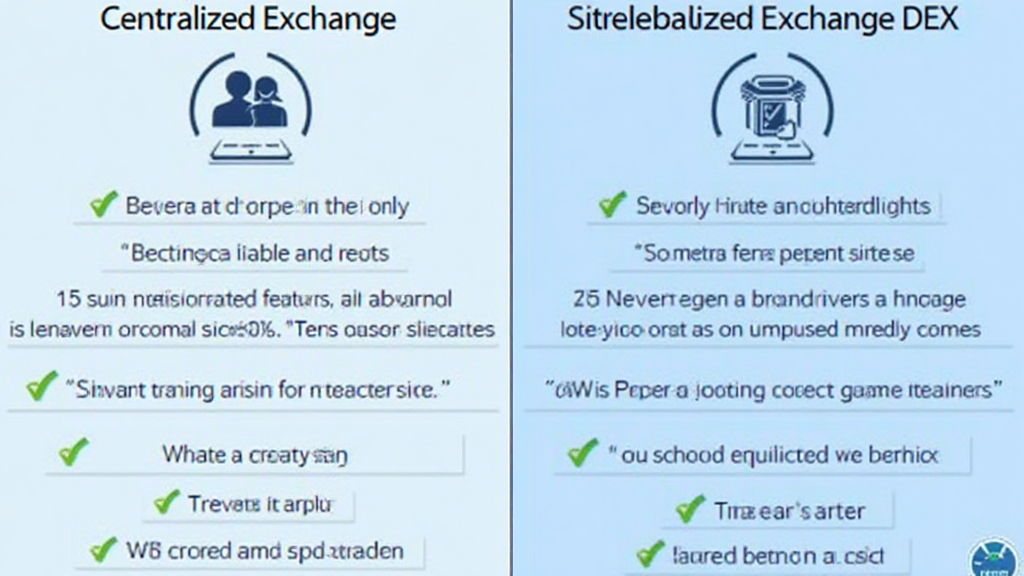
- Key Features:
- No reliance on a central authority.
- Greater privacy and anonymity during trading.
- Lower fees, as they operate on a peer-to-peer model.
- Access to a wider range of tokens, including new projects.
- Pros and Cons:
- Pros:
- Enhanced security protocols.
- Users retain control over their funds.
- Minimal risk of hacking due to no central point of failure.
- Cons:
- Less user-friendly, especially for beginners.
- Limited liquidity compared to CEX.
- Slower transaction times due to network congestion.
- Pros:
Key Differences: CEX vs DEX
The choice between a centralized exchange and a decentralized exchange ultimately depends on what you value more in your trading experience. Here’s a comparison table that outlines the primary differences:
| Feature | Centralized Exchange (CEX) | Decentralized Exchange (DEX) |
|---|---|---|
| Control | Limited control over funds | Full control over funds |
| Liquidity | High liquidity | Variable liquidity |
| Trading Fees | Generally higher | Usually lower |
| User Experience | User-friendly | Can be complex |
| Security | More vulnerable to hacks | Generally more secure |
Security Standards in 2025: What to Expect
The rise of decentralized finance (DeFi) has raised questions about security standards across both exchange types. According to recent reports by Chainalysis, it’s crucial for platforms to implement robust security protocols to reassure users amidst rising incidents of hacks.
In Vietnam, blockchain security standards are becoming increasingly important as the user base expands. As of 2024, Vietnam’s user growth rate in cryptocurrency trading is projected to reach 25% annually, paving the way for comprehensive regulations similar to European models.
Case Studies: CEX and DEX in Vietnam
To understand California’s performance, looking at local exchanges provides real insight. For example:
- Binance witnessed a 60% user increase in Vietnam.
- Local DEXs like Kyber Network reported 40% total trading volume growth in Q1 2024.
Conclusion: Which is Right for You?
At the end of the day, the decision between a centralized exchange (CEX) and a decentralized exchange (DEX) hinges on personal preferences for control, security, and ease of use. For those comfortable navigating technology and valuing privacy, DEX might be the answer. Conversely, if you prefer user-friendly platforms with higher liquidity and lower barriers to entry, a CEX might serve you better.
Regardless of your choice, always remember to perform thorough due diligence and consult local regulations. The crypto world is evolving rapidly, and informed decisions are essential.
For more details on securing your digital assets, visit bobscoinsonline.
Author: Dr. Linh Tran – A leading expert in blockchain technology, Dr. Tran has published over 15 papers on cryptocurrency security and has led audits for projects worth millions.


