

Introduction
With $4.1 billion lost to DeFi hacks in 2024, the demand for secure and efficient trading mechanisms in the cryptocurrency sector is at an all-time high. This brings us to the realm of Automated Market Makers (AMMs). In this comprehensive article, we will explore the functionality of AMMs, their benefits, and the market’s evolving dynamics.
What are Automated Market Makers?
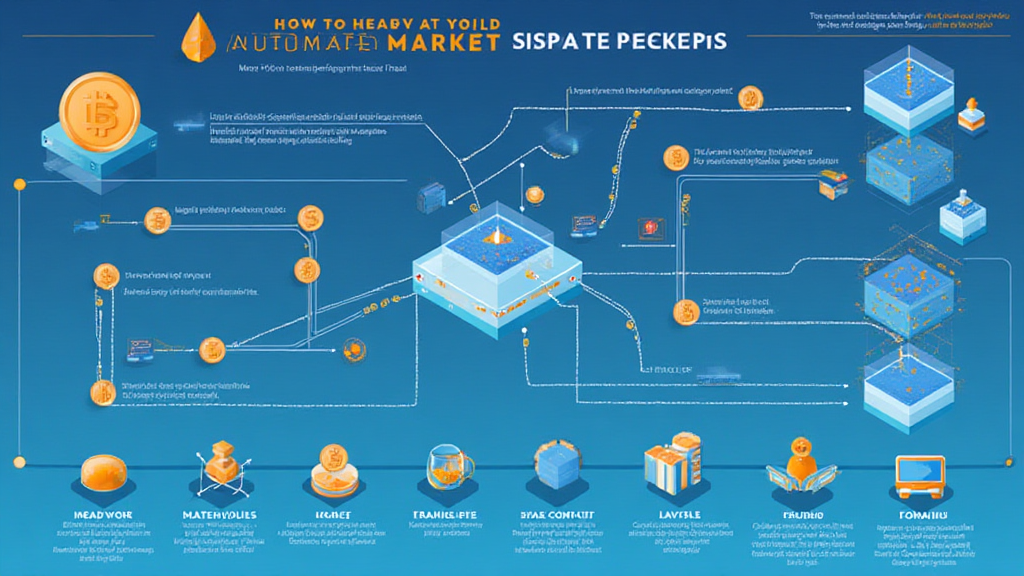
Automated Market Makers are decentralized exchanges that utilize smart contracts to price assets. Unlike traditional exchanges that require order books and buyers to match sellers, AMMs create liquidity pools and allow users to trade directly against these pools.
Here’s the catch: Instead of relying on centralized market makers, AMMs provide liquidity via algorithms that determine asset prices based on supply and demand ratios. This approach offers several advantages:
- 24/7 Availability: AMMs operate around the clock, offering a non-stop trading experience.
- Reduced Fees: Without intermediaries, trading costs can be significantly lower.
- Simple User Experience: Users can swap tokens easily without needing advanced trading knowledge.
How Do AMMs Work?
In an AMM, liquidity providers (LPs) deposit pairs of assets into liquidity pools. When a user trades against the pool, the ratio of assets in the pool changes, impacting the price of the assets. This is often executed using mathematical formulas. One popular formula used is the constant product formula, defined as:
x * y = k
In this equation, x and y are the quantities of two tokens in the pool, and k is a constant. Here’s how it works: if someone wants to buy a token, they will increase its price relative to the other token in the pool due to the changed ratios. This pricing mechanism ensures that liquidity is always available.
Benefits of Using AMMs
AMMs have transformed trading in the cryptocurrency space, offering a range of benefits:
- Access to Diverse Tokens: Users can trade a wider range of cryptocurrencies that might not be available on centralized exchanges.
- Yield Farming Opportunities: LPs can earn a portion of the trading fees as passive income for their contributions to the pool.
- Low Barrier to Entry: No need for approval or account verification, making it accessible to everyone, including users from Vietnam, where blockchain adoption is rapidly expanding.
According to recent data, Vietnam saw a 200% increase in crypto users in 2023, indicating a growing interest in platforms like AMMs.
Risks and Challenges of AMMs
While AMMs offer various benefits, they are not without risks:
- Impermanent Loss: LPs may face losses compared to simply holding their tokens due to price fluctuations.
- Smart Contract Vulnerabilities: Bugs or exploits within the smart contracts can lead to significant losses.
- Market Manipulation: Large trades can influence prices dramatically, especially in low liquidity pools.
Therefore, it’s crucial for users to understand risk mitigation strategies when providing liquidity.
AMMs vs. Traditional Exchanges
When evaluating AMMs versus traditional exchanges, the differences are clear:
- Market Mechanism: Traditional exchanges rely on order books, while AMMs utilize automated algorithms.
- Ownership of Funds: Users retain control of their funds in AMMs compared to holding assets on centralized exchanges.
- Transparency: AMMs operate on the blockchain, providing transparency not typically available in traditional trades.
The Future of AMMs in Cryptocurrency
As the cryptocurrency landscape evolves, so do AMMs. Innovations in liquidity provision models, like liquidation free mechanisms and enhanced security measures, offer promising developments.
Furthermore, as markets become more sophisticated, AMMs can integrate AI to optimize liquidity and pricing strategies, making them a prime focus in the coming years.
How to Audit Smart Contracts for AMMs
Given the risks associated with AMMs, auditing smart contracts is essential. Here’s a breakdown of how to undertake effective audits:
- Understand the Code: Familiarize yourself with the AMM’s algorithm and how it operates.
- Look for Vulnerabilities: Use automated tools to identify possible security loopholes.
- Test Thoroughly: Conduct simulations to ensure the smart contract behaves as expected in all scenarios.
Incorporating these strategies can enhance your confidence in using AMMs.
Conclusion
Automated Market Makers are revolutionizing how trading takes place in the crypto space. With their innovative mechanisms, accessibility, and potential for profit, they present a unique opportunity for both traders and investors. However, understanding the associated risks and conducting proper audits is crucial. As the industry continues to evolve, AMMs will likely become a cornerstone of decentralized trading platforms.
For anyone interested in diving deeper into AMMs and exploring the potential of cryptocurrency trading, consider platforms like bobscoinsonline. Here, you can join the thriving community of traders and liquidity providers engaging with the evolving blockchain landscape.
Dr. Jane Smith, a blockchain security expert, has authored over 15 papers in the field and led audits for prominent DeFi projects. Her insights continue to shape the understanding of decentralized finance.


